
Challenge: The challenge was to explore how Artificial Intelligence (AI) could assist instructors with grading open-ended activities in VHL Central. While these activities are valuable for language learning, grading them was slow, tedious, and often discouraged instructors from assigning them. The goal was to reduce the grading burden without compromising quality, trust, or pedagogical integrity.
Background: Open-ended activities in VHL Central encourage students to produce extended written responses in their target language, which is critical for skill development. However, instructors had to manually review and critique each submission, which was especially burdensome in large classes. Many avoided assigning this activity type altogether.
At the same time, introducing AI into grading presented unique challenges: instructors expressed skepticism about reliability, security, and fairness. Many also felt conflicted, as they discouraged students from using AI for assignments while being asked to use it themselves. Balancing these tensions was key to adoption.
Process: To better understand needs and concerns, I conducted user interviews with instructors to uncover pain points, grading workflows, and sentiment toward AI. These conversations revealed both enthusiasm for time-saving support and hesitation around over-reliance on automation.
Working closely with the Product Manager and Engineering Leads, we audited current grading flows, identified where AI could provide meaningful assistance, and mapped potential solutions. The team prioritized designs that kept instructors in control—using AI as a helper rather than a replacement.
Implementation: Using the existing grading views, I designed a new area that introduced AI-generated feedback and scoring suggestions alongside the instructor’s grading tools. Instructors could:
Brightly colored area calls visual attention to alert instructors that AI is being used.
Preview AI-generated draft feedback before accepting, editing, or discarding it.
Retain full control over final grades and comments, reinforcing trust and transparency.
Benefit from workflow improvements that significantly reduced repetitive tasks, particularly in large classes.
Result: The implementation balanced efficiency with instructor autonomy, leading to a grading process that was faster, less repetitive, and more approachable—while addressing concerns around trust, transparency, and responsible AI use in education.
Final UI/UX Solution
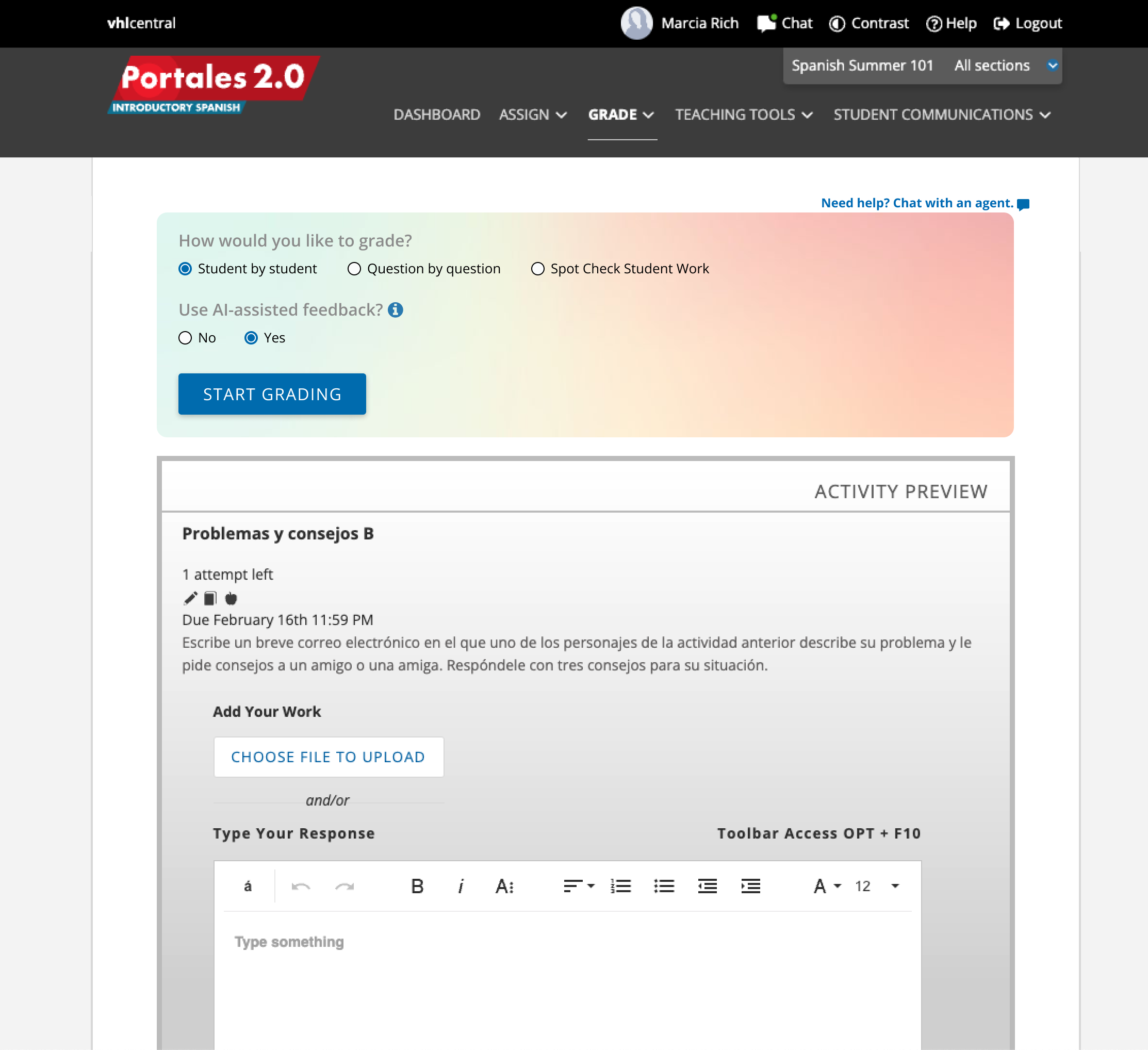
Empower instructors to select when they want to use AI in grading, or not.
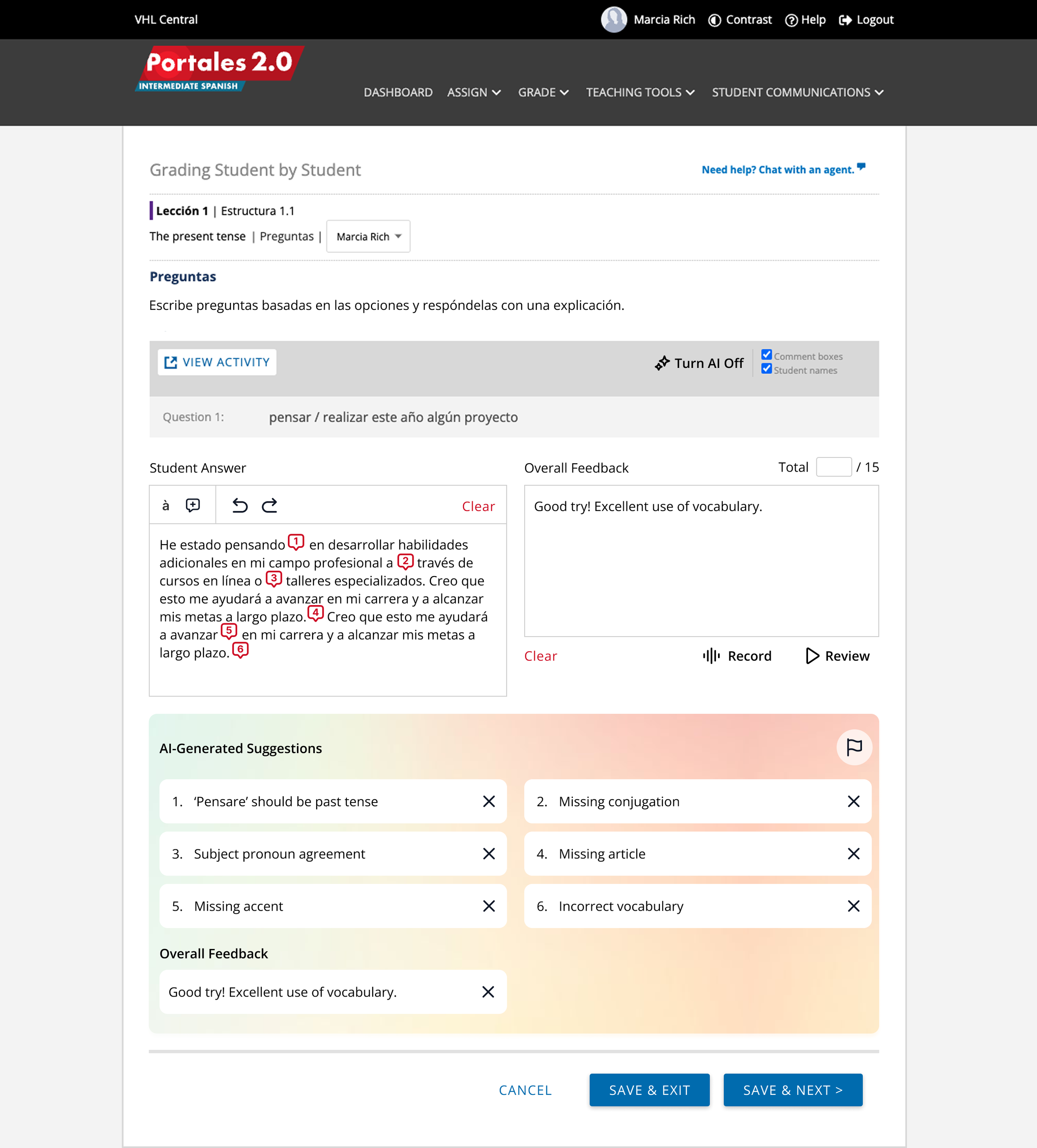
When enabled, suggestions are in-line and instructors can remove or edit as needed.
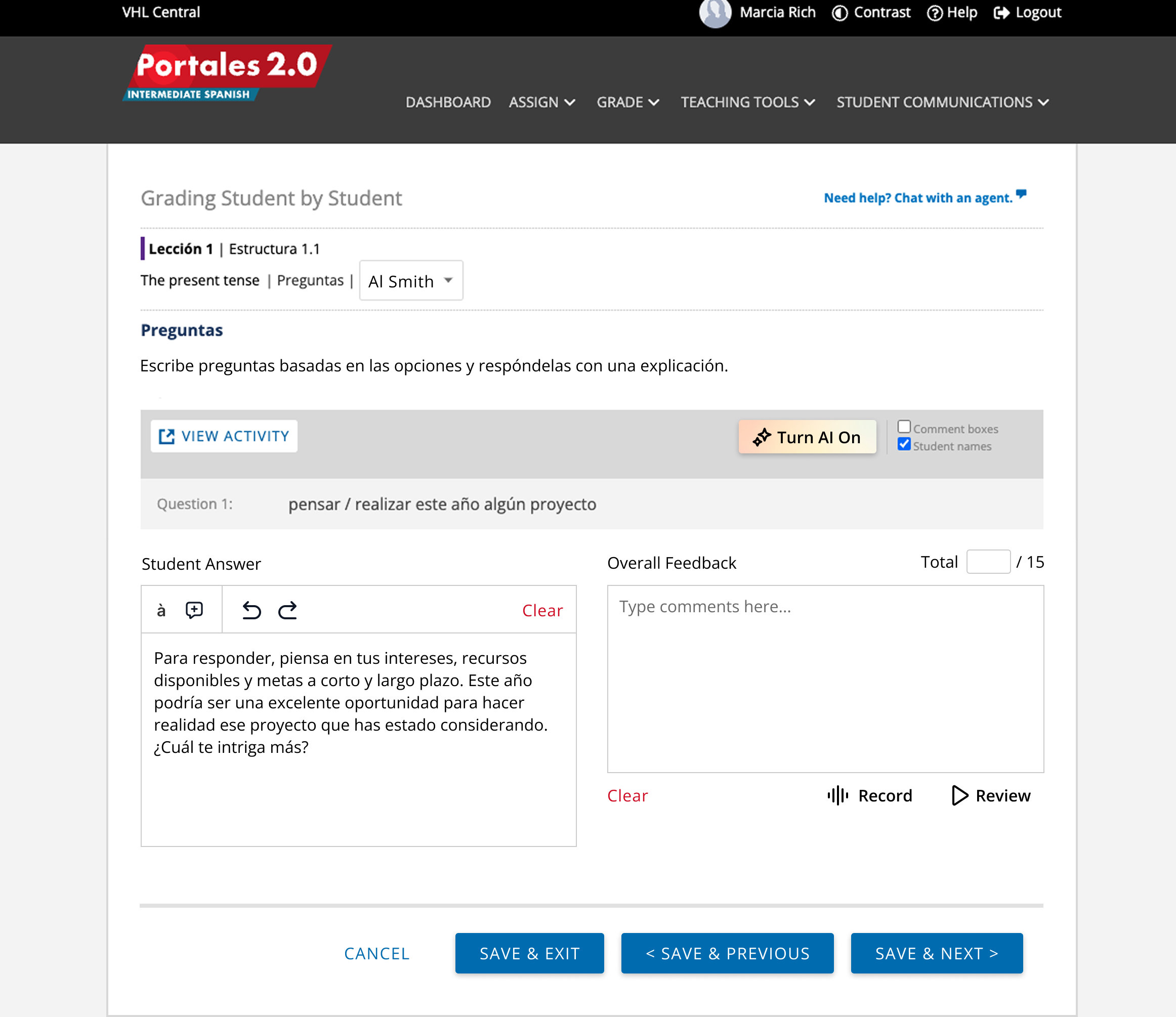
Instructors can turn AI on or off during the grading experience.
