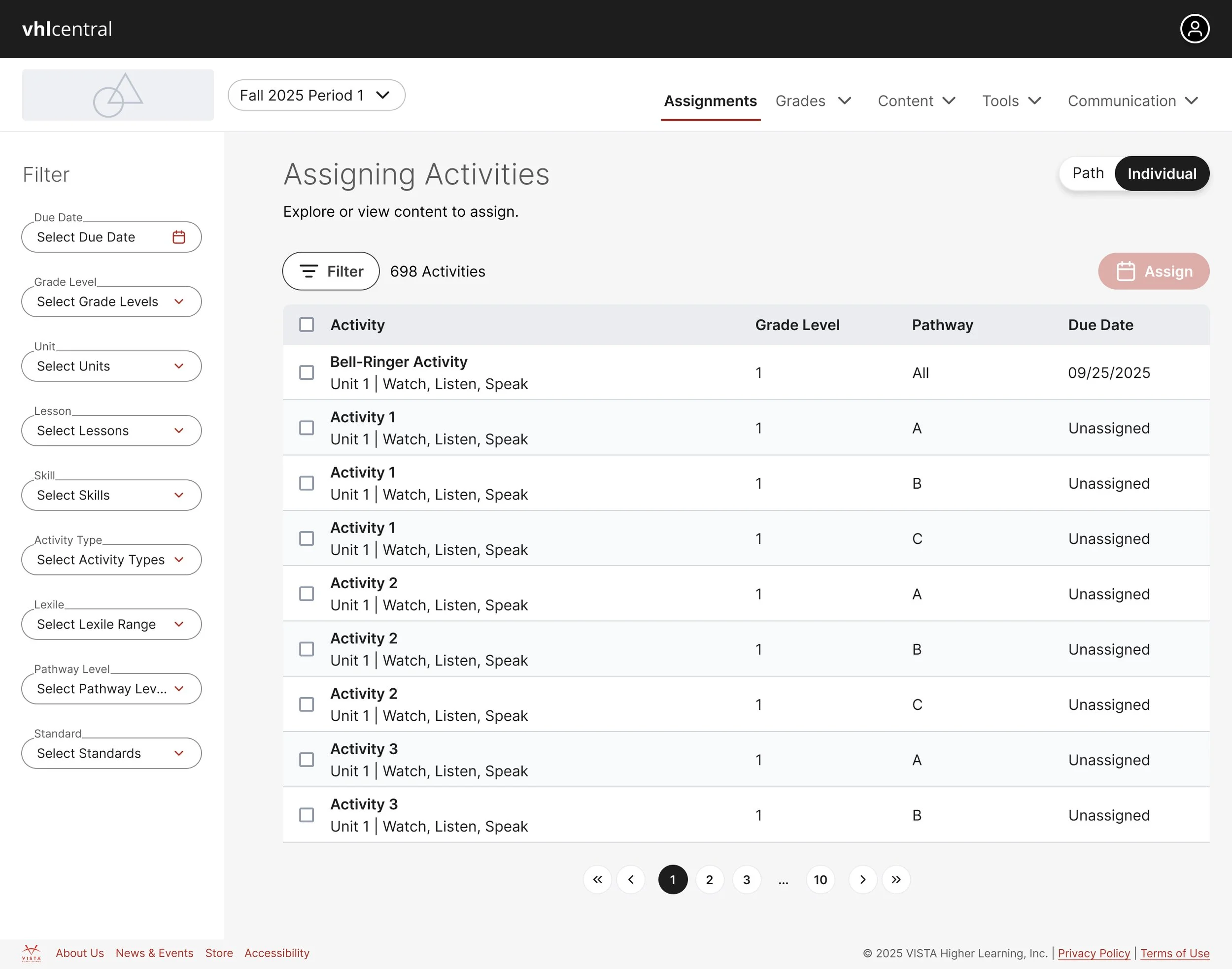
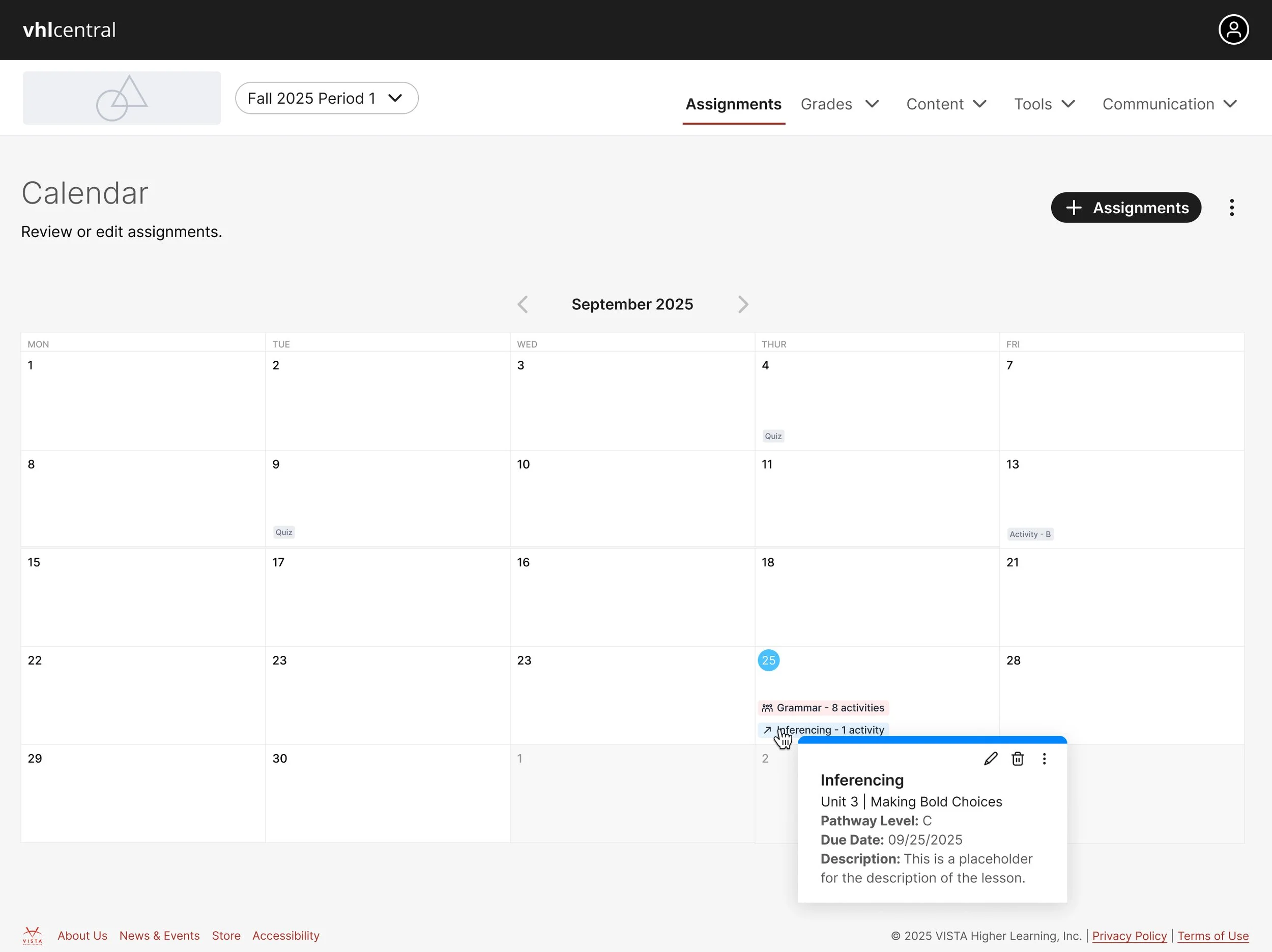
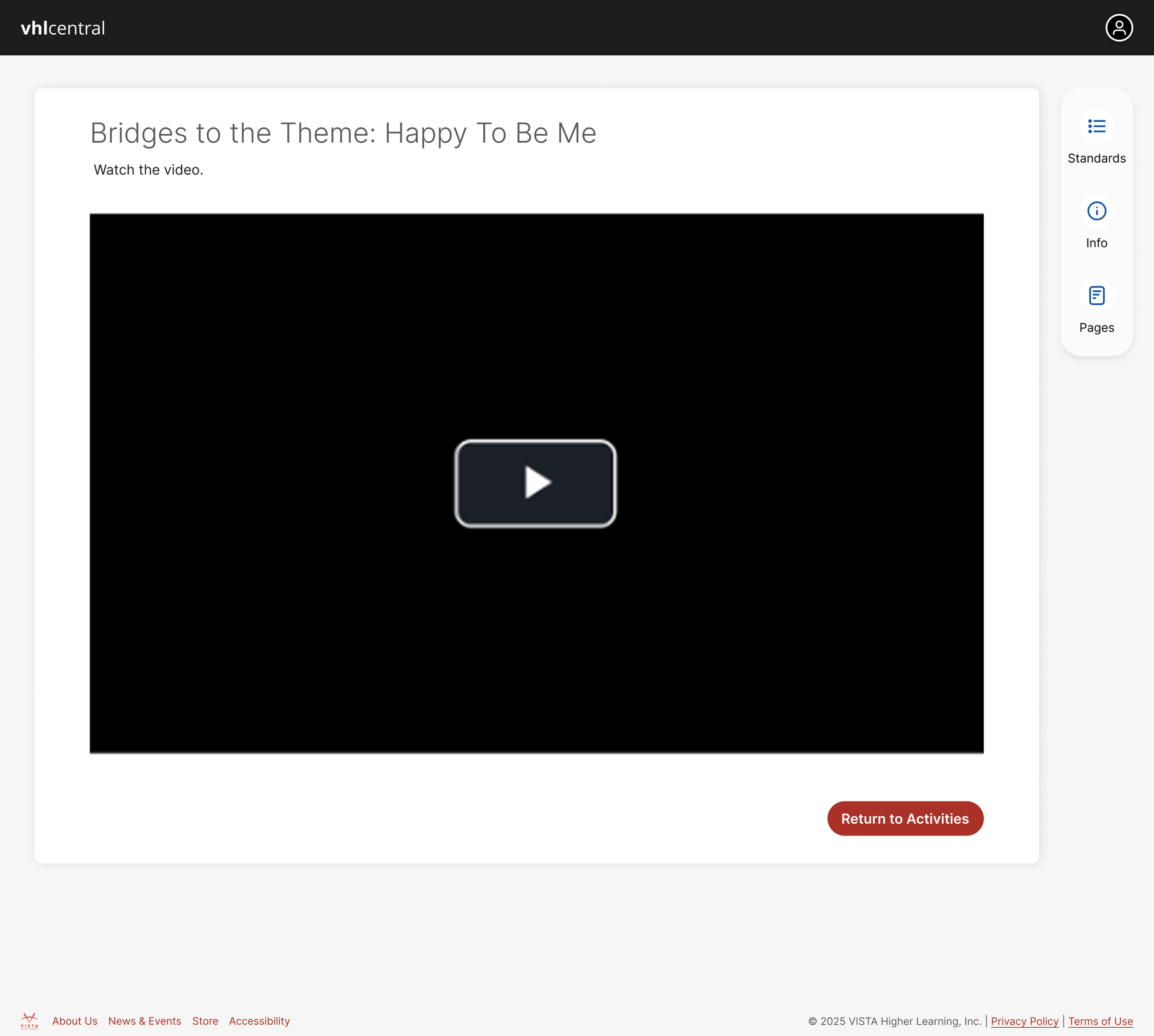
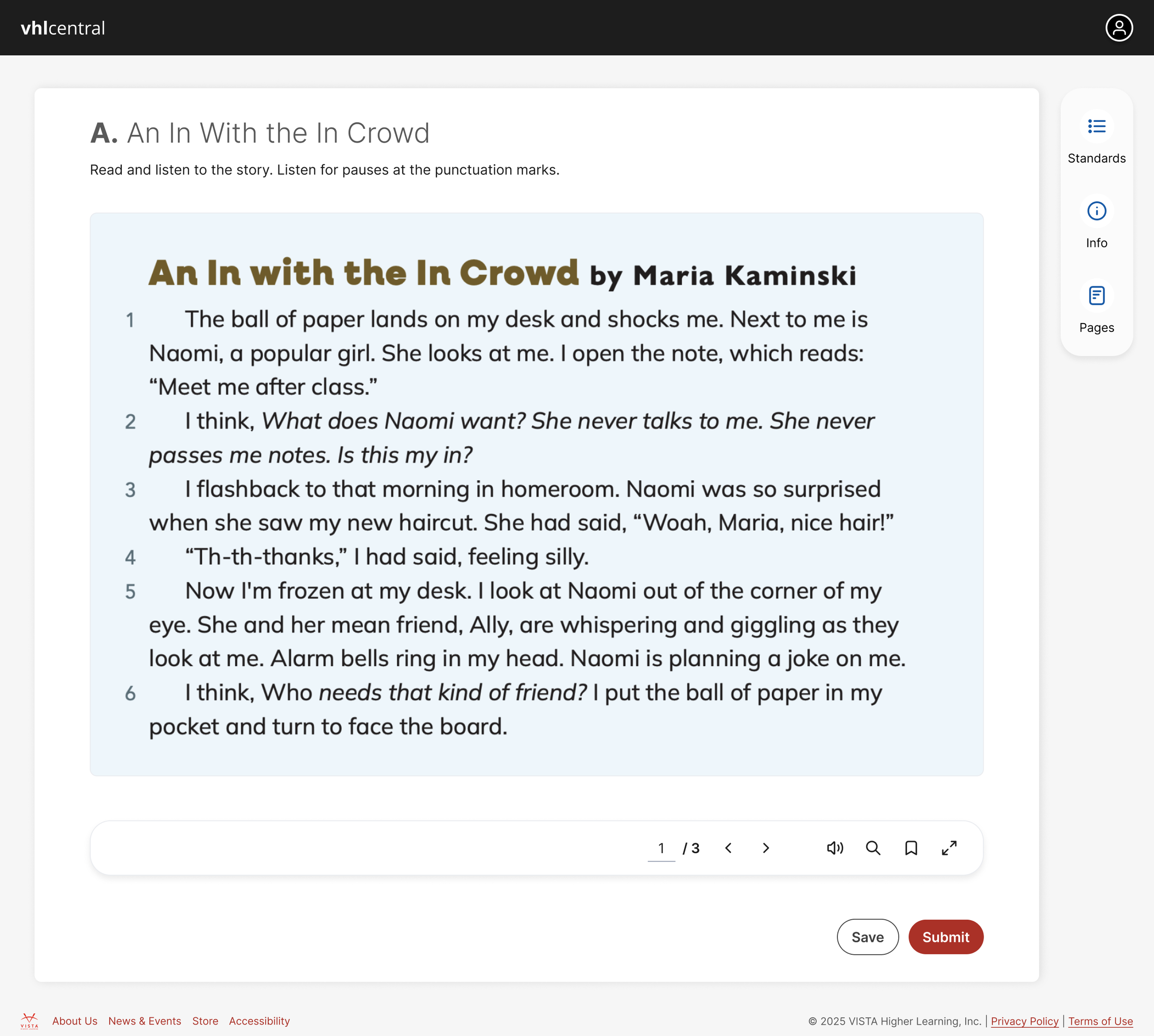
Challenge: VHL set out to enter and lead the $275M–$350M English reading intervention market. The goal was to transform existing ELA programs into a digital-first experience—leveraging EdTech capabilities while integrating consumable print resources—to deliver adaptive, data-driven instruction that accelerates and personalizes literacy outcomes for secondary students.
The challenge required more than iteration. It demanded a clear understanding of a new audience, their unmet needs, and how to translate VHL’s strengths into a differentiated, scalable product.
Background: VHL approached this opportunity with strong foundational advantages:
Research-Based Content & Pedagogical Expertise
Established programs grounded in the Science of Reading, positioned VHL to deliver evidence-based literacy intervention.Intervention Nucleus
The program was intentionally designed at the intersection of English-Proficient and English-Learner striving readers—ensuring intervention was not an afterthought, but the core of the experience.Engagement Through Content
High-quality media and authentic, grade-level texts provided both “mirrors and windows,” helping students see themselves while expanding their perspectives.Digital-First with Print-Based Support
The vision combined robust digital personalization and teacher-facing analytics with high-impact print materials, creating a blended learning experience tailored to diverse classroom needs.
Process: To reduce risk and ensure product-market fit, I led the UX team through a structured discovery and design process:
1. Competitive Analysis
We evaluated 7 leading reading intervention platforms to understand:
Feature gaps and parity
Instructional models and scaffolding approaches
Teacher workflows and reporting capabilities
Differentiation opportunities for VHL
2. User Research
We conducted surveys and in-depth interviews with educators to:
Define target personas (primarily secondary intervention specialists)
Identify core pain points, including time constraints, lack of actionable data, and fragmented tools
Map existing workflows and tools used in classrooms today
3. Collaborative Workshop (2-Day Onsite)
We facilitated a cross-functional workshop with stakeholders to:
Map end-to-end user journeys
Define Jobs To Be Done across instructional phases (planning, instruction, assessment, intervention)
Align on product vision and priorities
Execution: With a clear understanding of user needs and opportunities, we moved into design and validation:
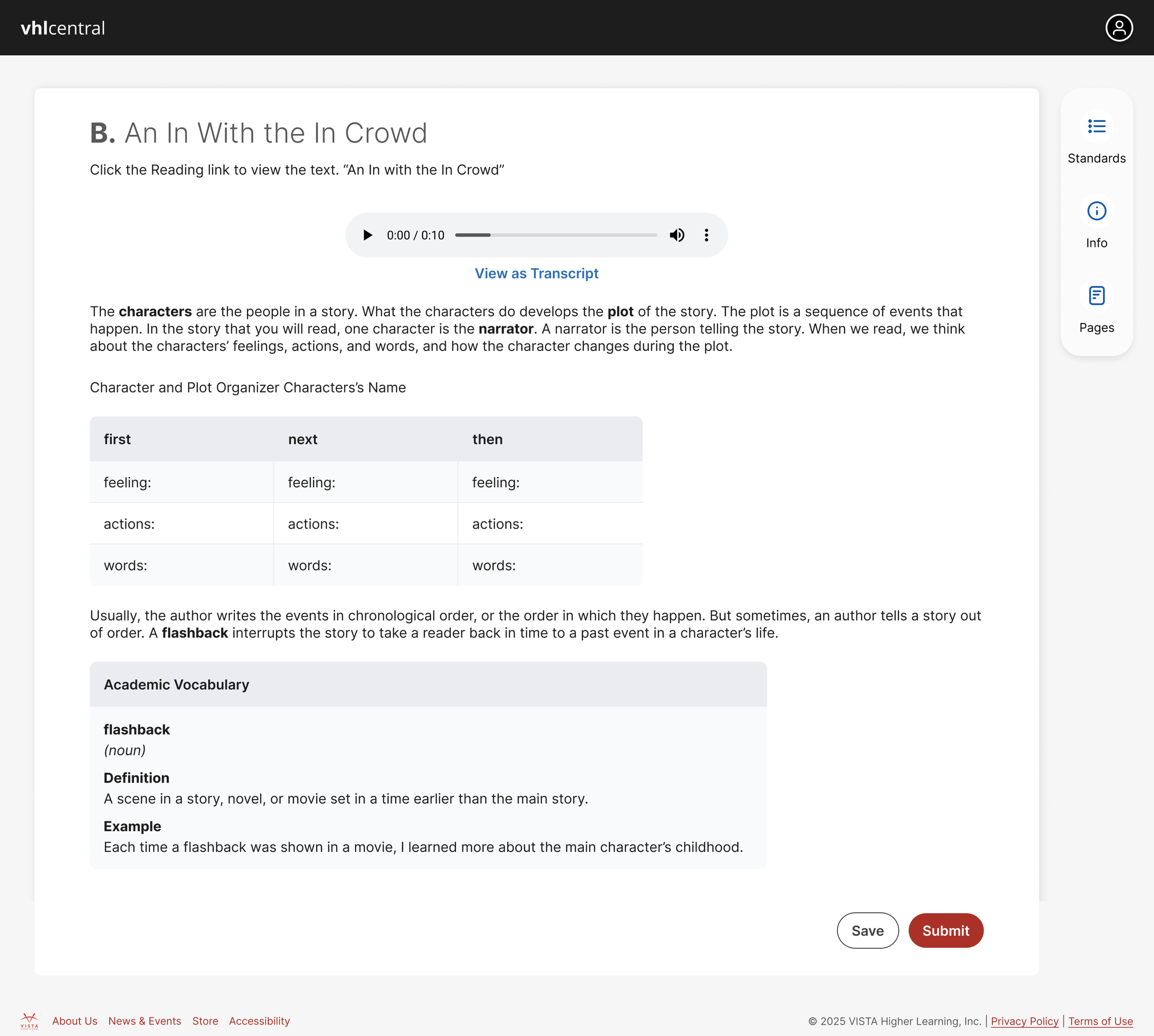
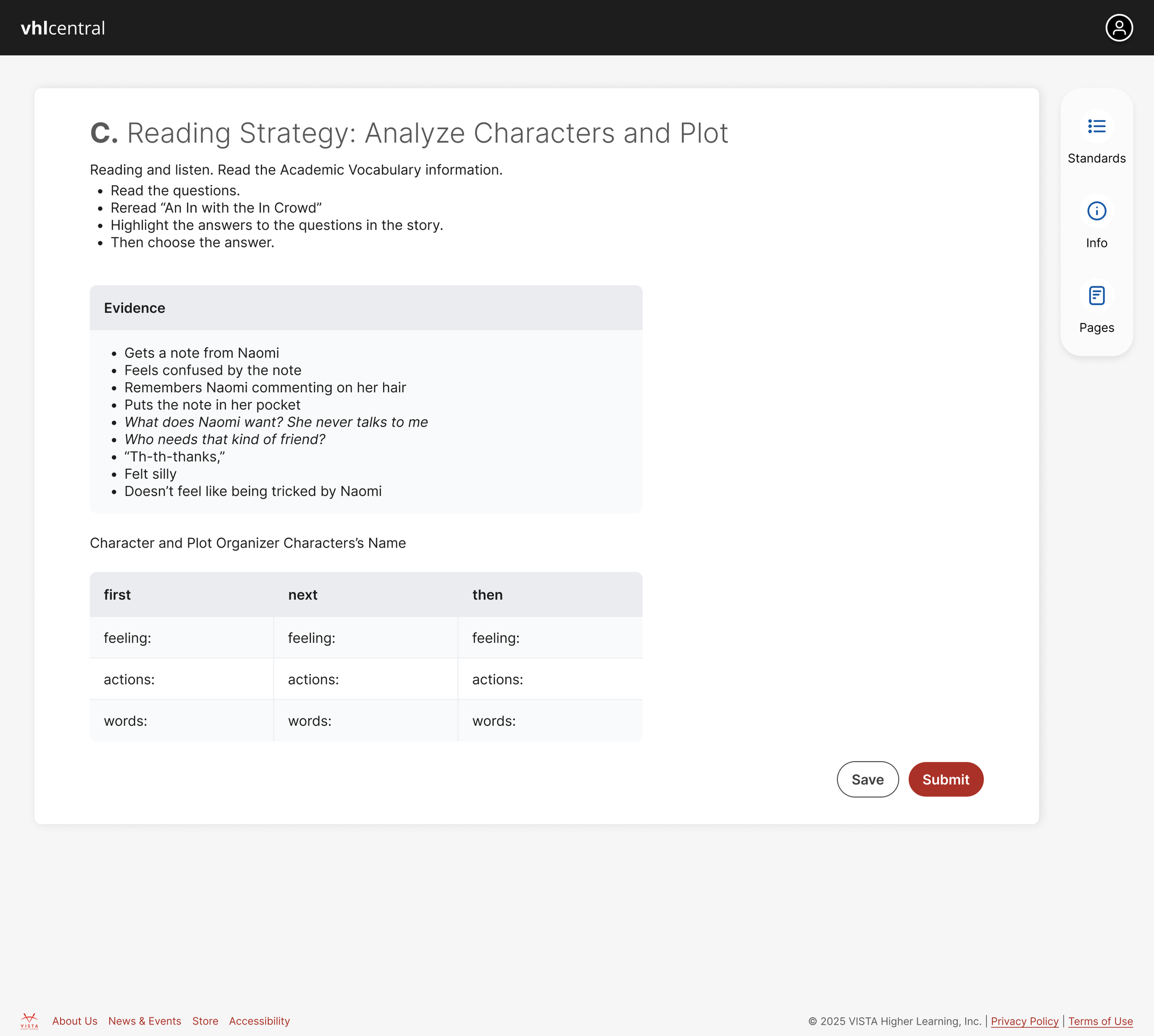
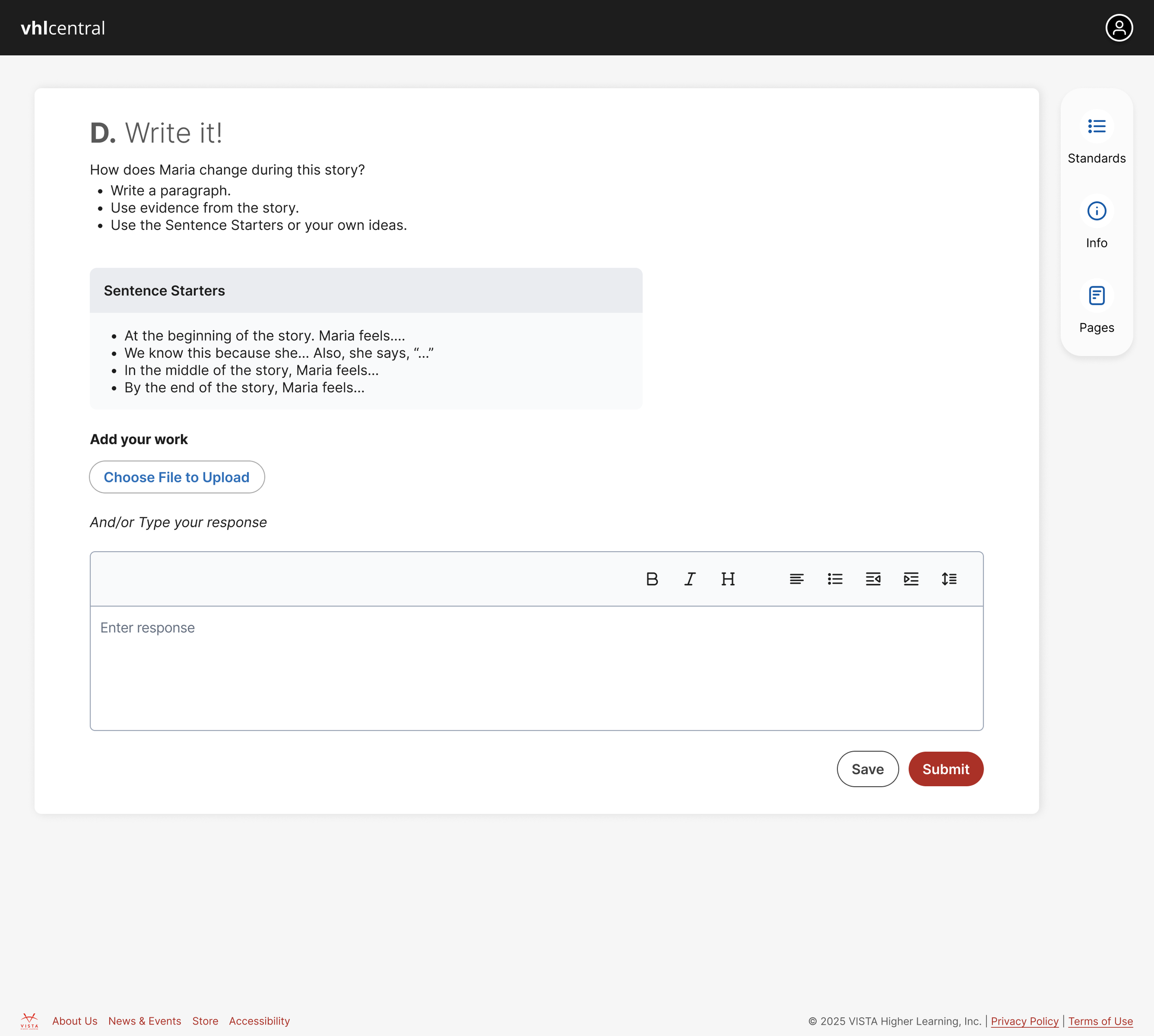
Rapid Prototyping
Created low-fidelity concepts to explore workflows and information architecture, followed by high-fidelity prototypes to simulate real product interactions.Iterative Feedback Loops
Conducted usability sessions with teachers to validate:Ease of lesson planning and assignment creation
Clarity and usefulness of student data insights
Effectiveness of intervention pathways
Refinement & Alignment
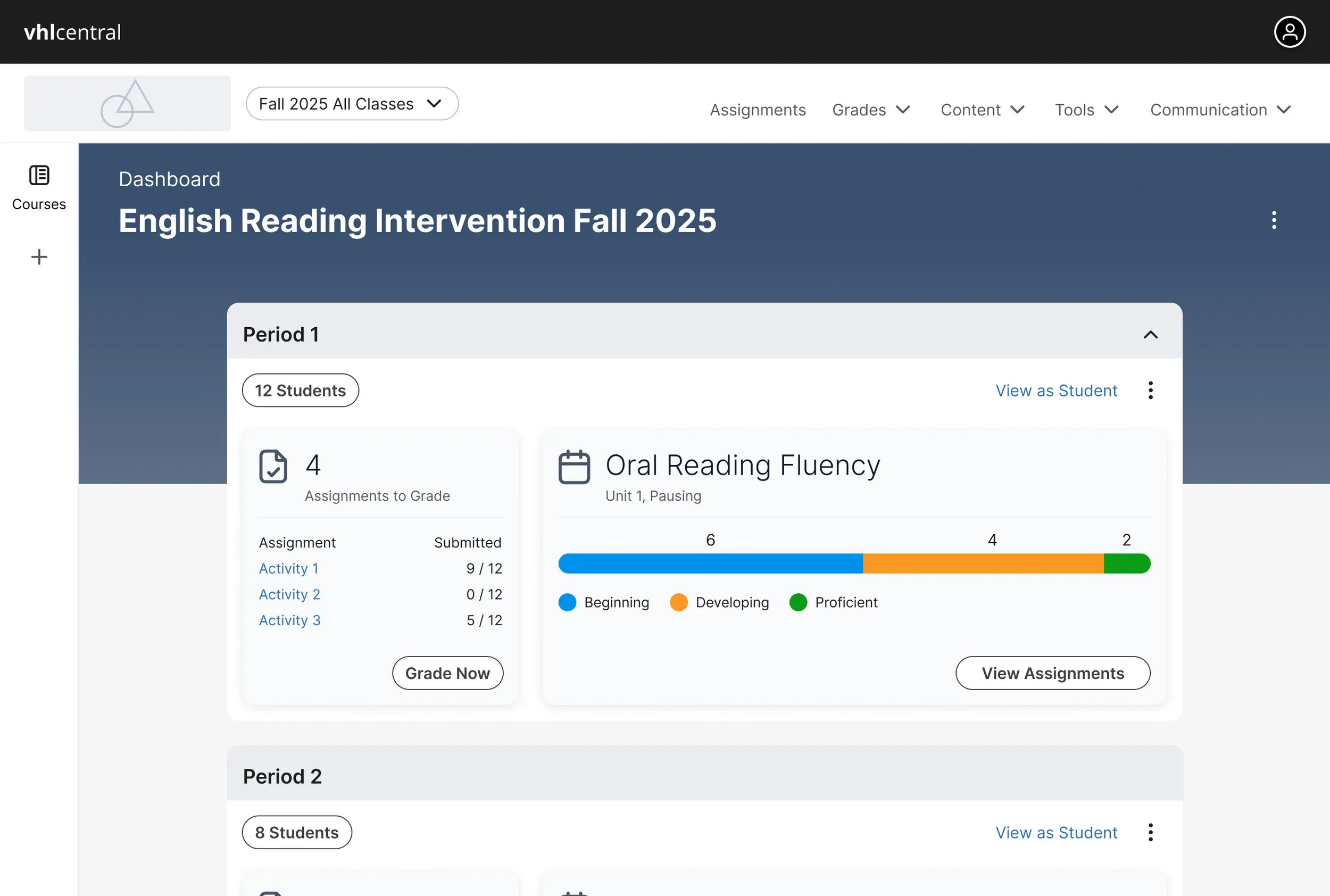
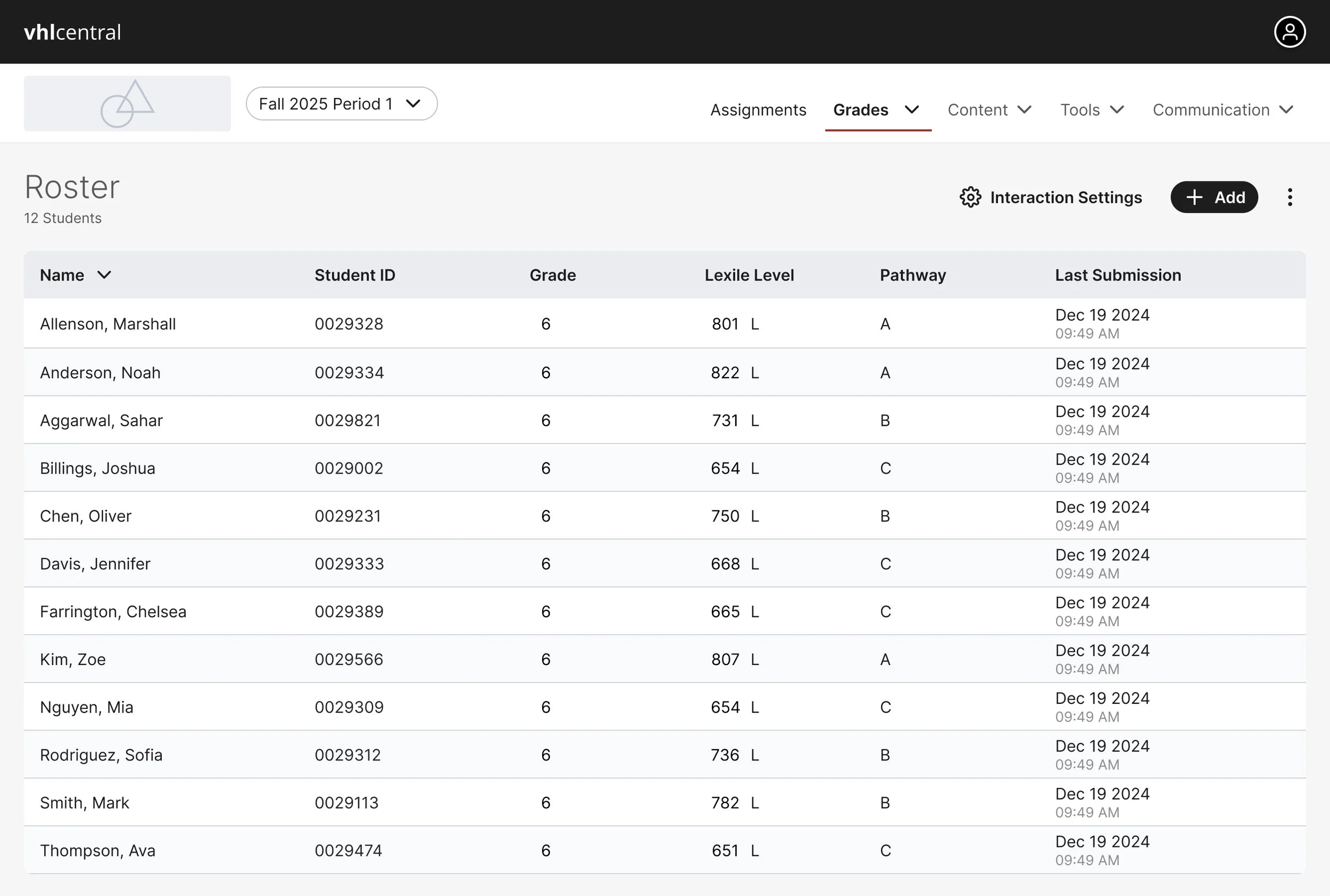
Incorporated feedback to refine:Teacher dashboards and analytics
Student learning flows and personalization
Integration of print and digital touch points
Result: The project delivered both strategic clarity and validated direction:
Validated Product Concept
Confirmed strong demand for a digital-first, data-driven intervention platform tailored to students in grades 6-12, including LTELs.Clear Execution Roadmap
Defined what to build within the VHL Central platform, including:Teacher-friendly dashboards with actionable insights
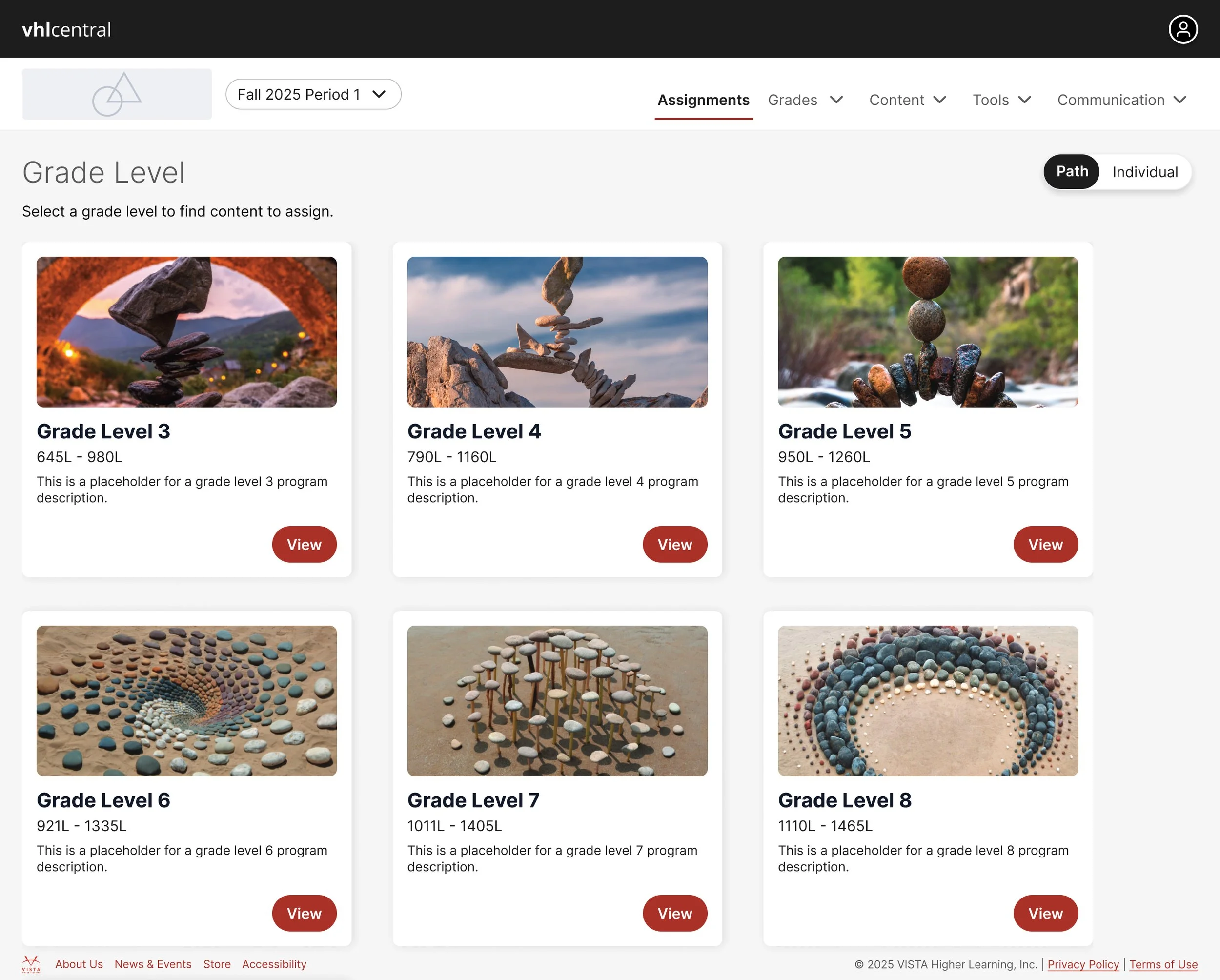
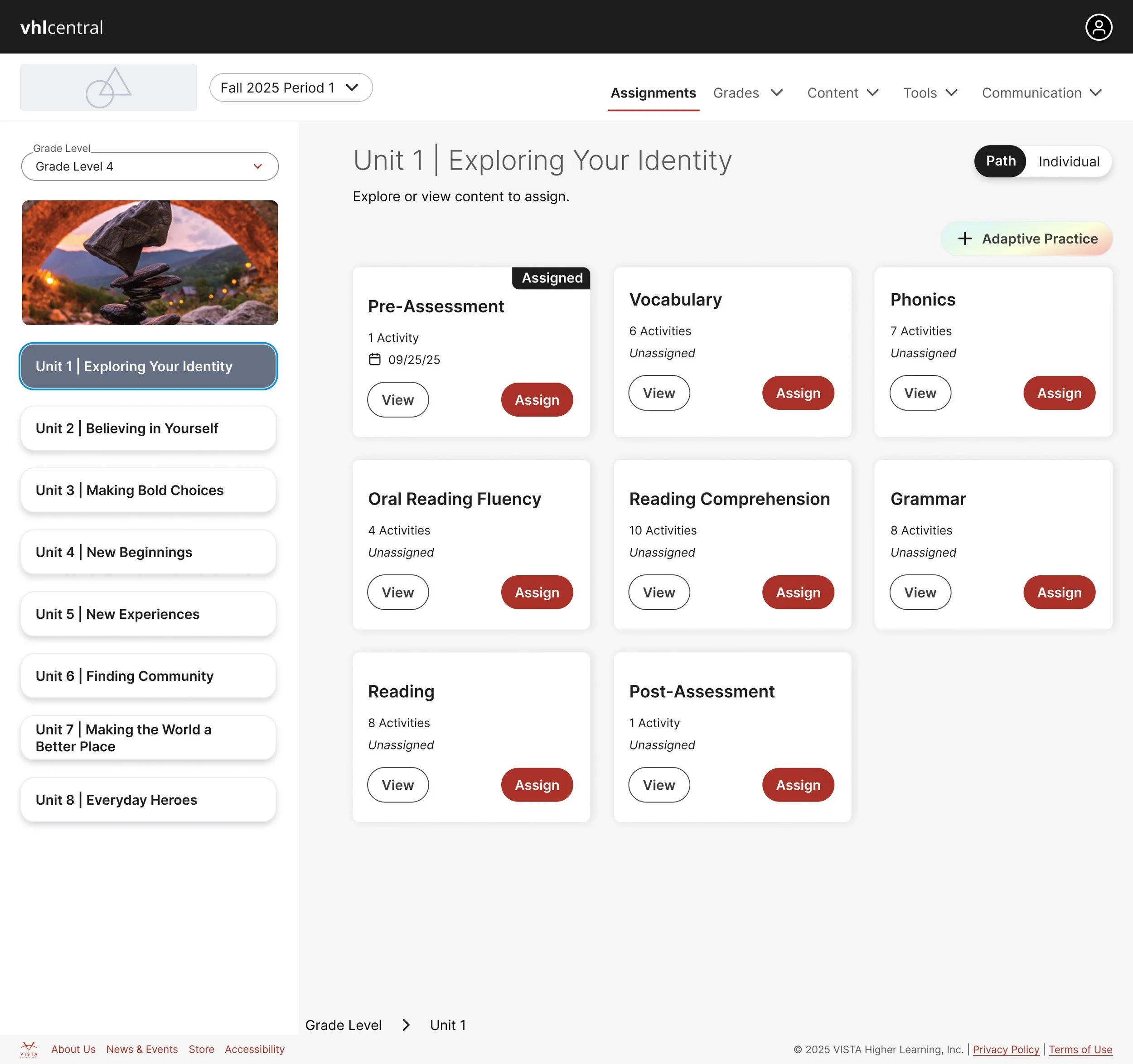
Multi-level content with adaptive learning pathways for students
Seamless integration of digital resources for in-class use
Reduced Product Risk
Early user validation ensured alignment with real classroom needs before engineering investment.Stronger Market Positioning
Positioned VHL to confidently enter the reading intervention market with a differentiated, research-backed solution.
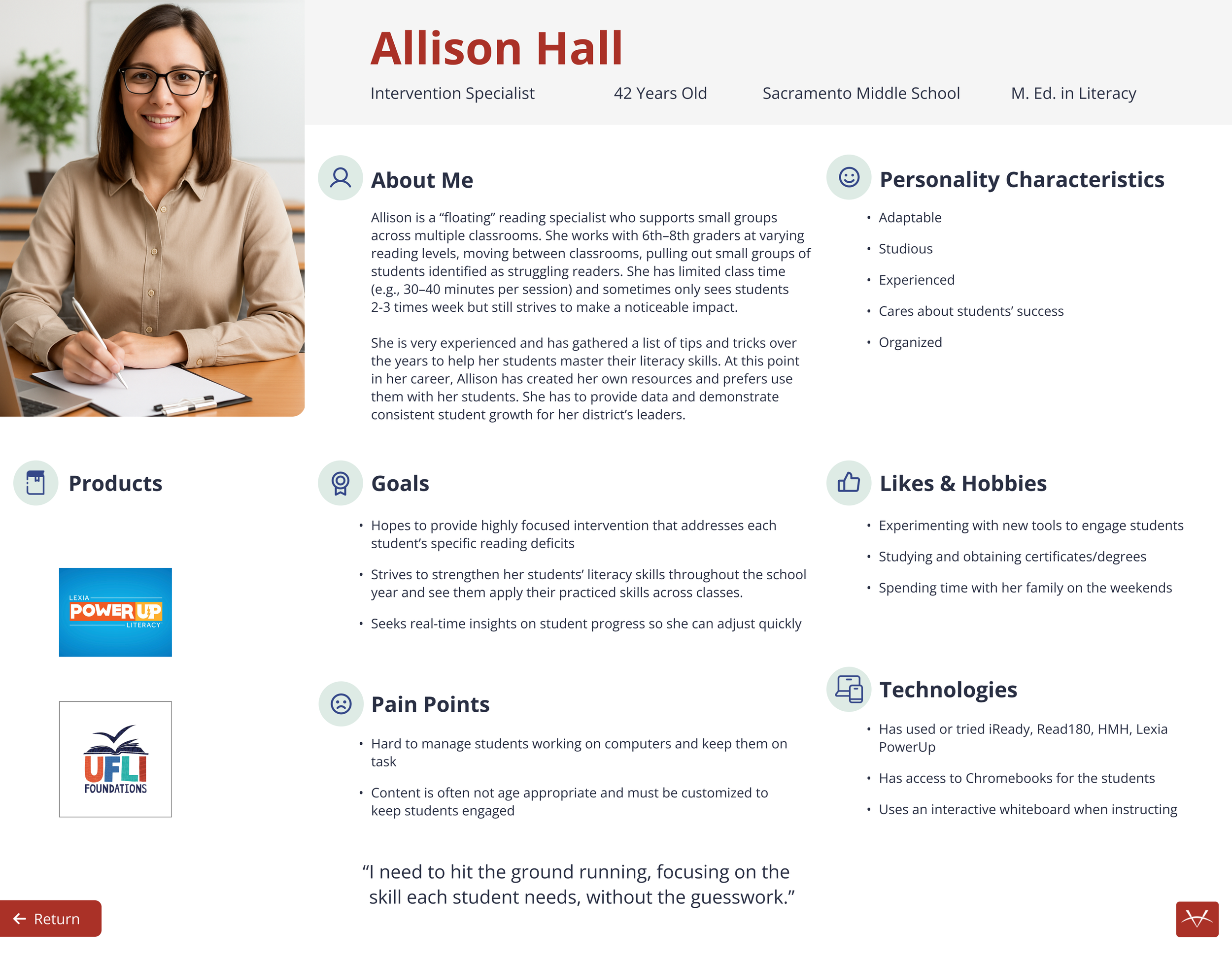
Target Persona: Reading Interventionist
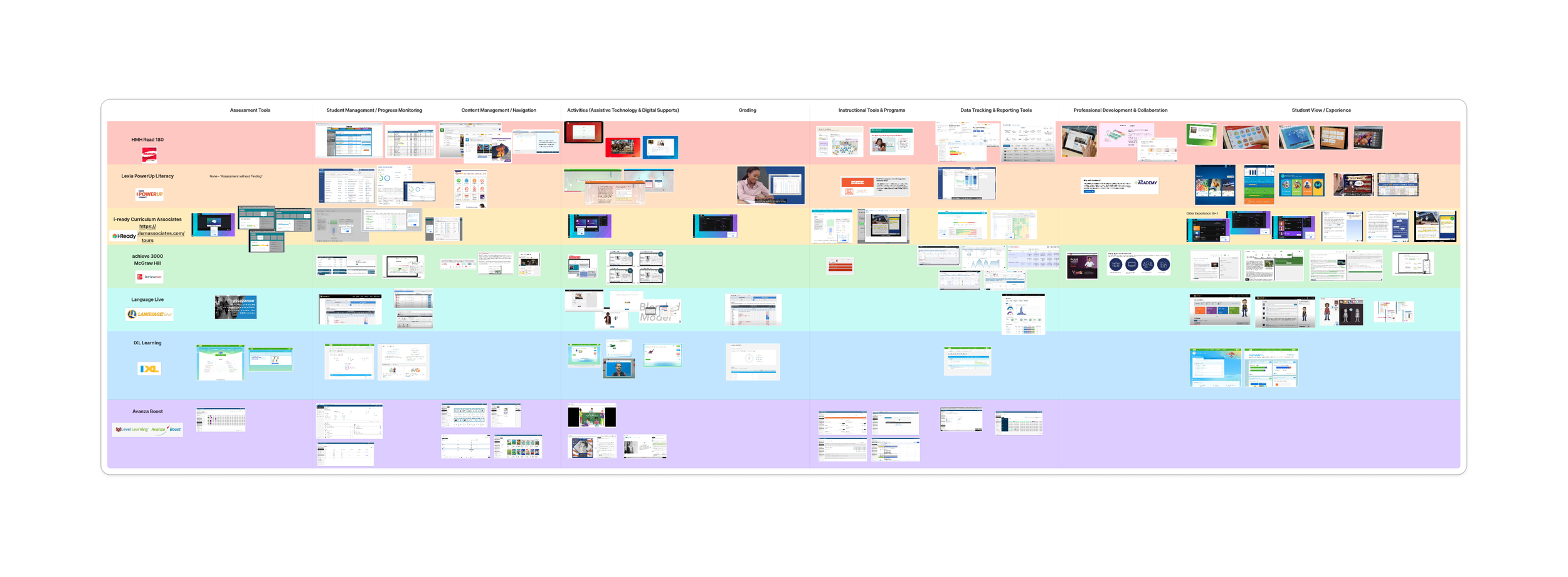
Competitor Research & Analysis
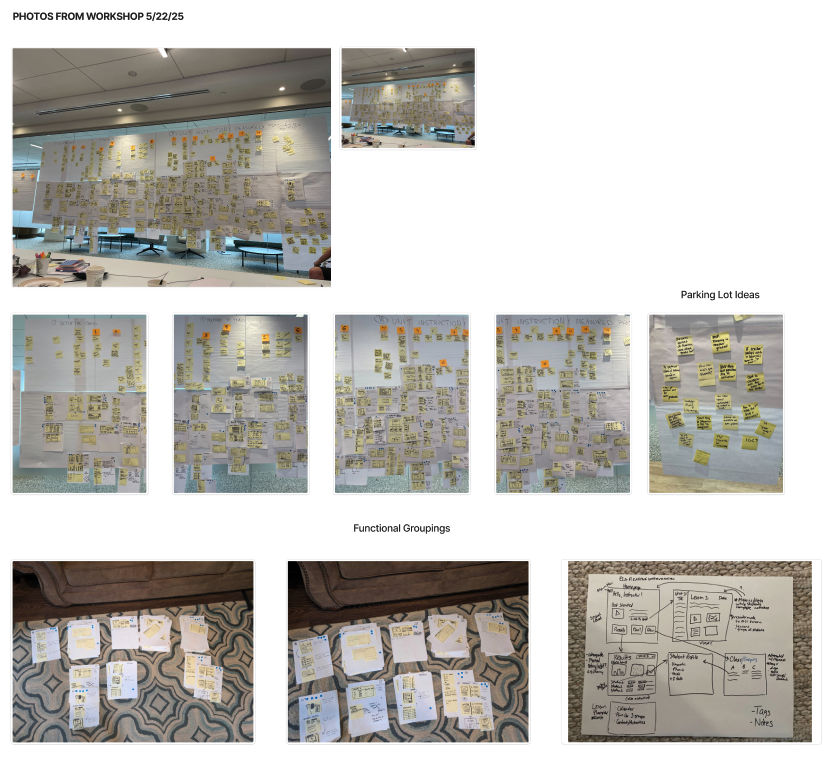
Brainstorming and Sketching
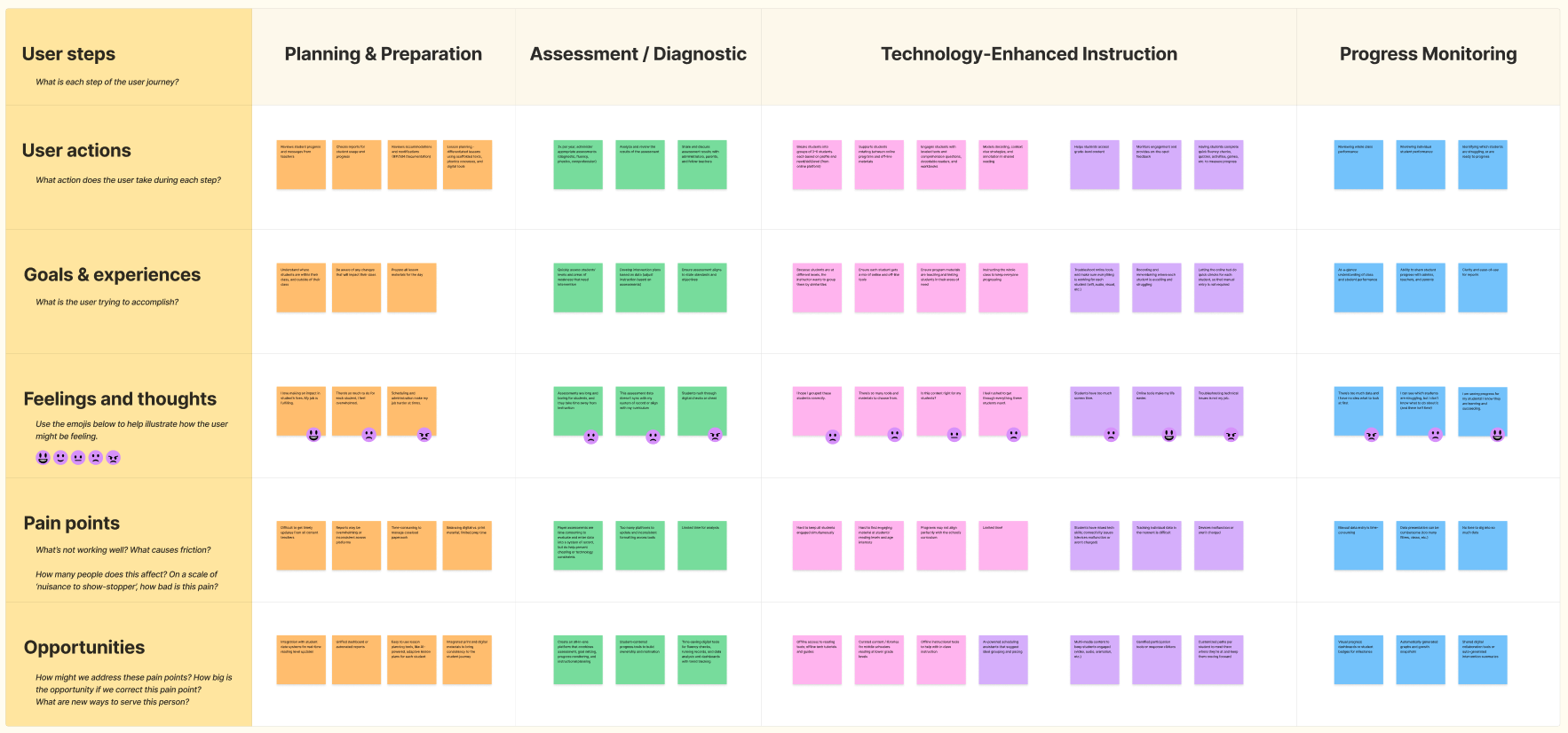
Instructor Journey Maps
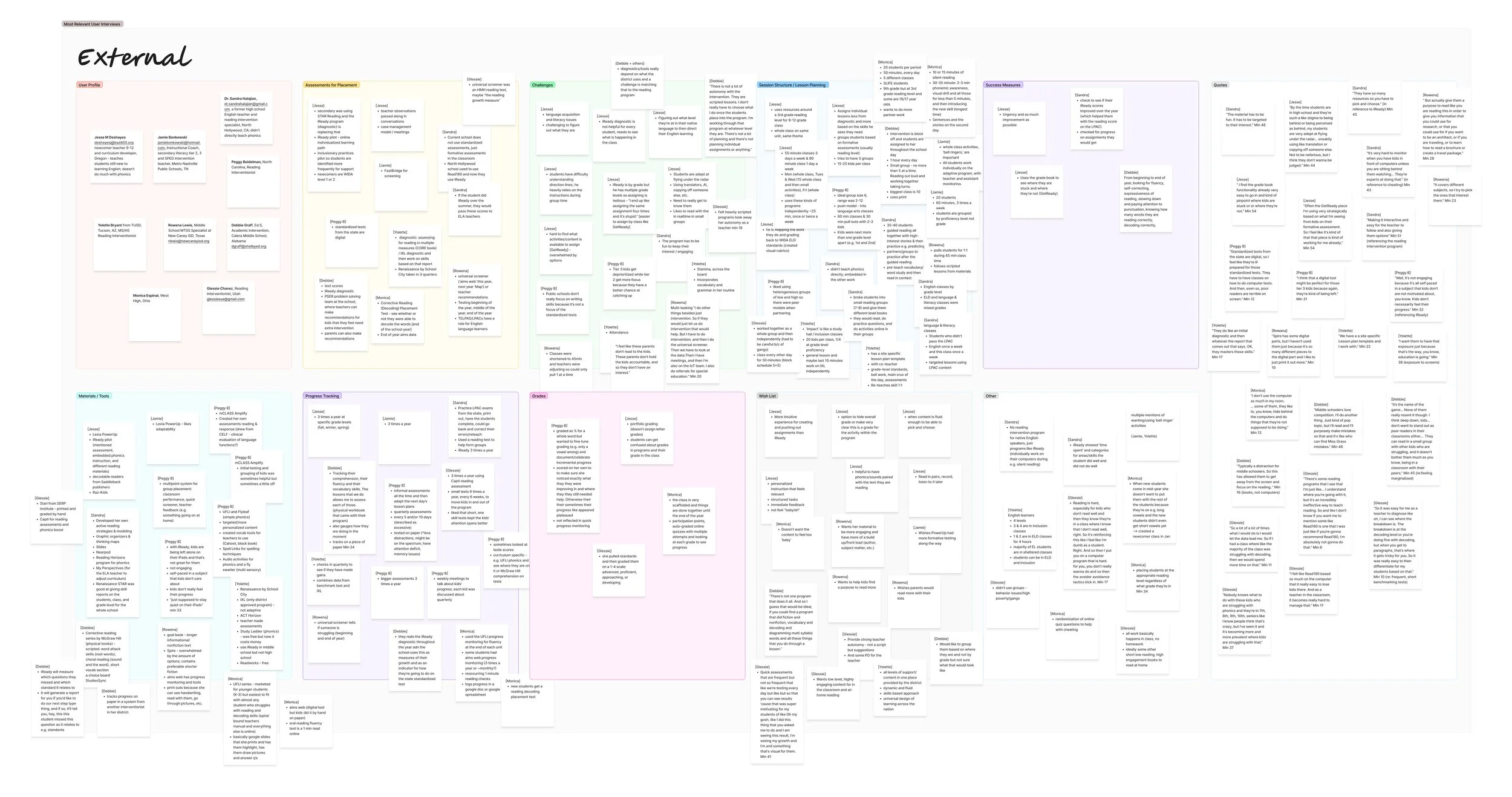
Affinity Diagram of User Interviews
High Fidelity Figma Prototype